


Two Easy Ways to Start Earning Rewards!
Become a member today! Members-only pricing and offers, personalized care notifications, Vital Care points back on every purchase and more!
 Become a credit card member today!
Earn 2X Pals Rewards points at Petco
when you use Petco Pay!APPLY NOWLearn More About Petco Pay Benefits
Cat's Paw Padding: Problems, Care & Prevention
Updated on June 18, 2026

Written by Lauren M. Jones, VMD
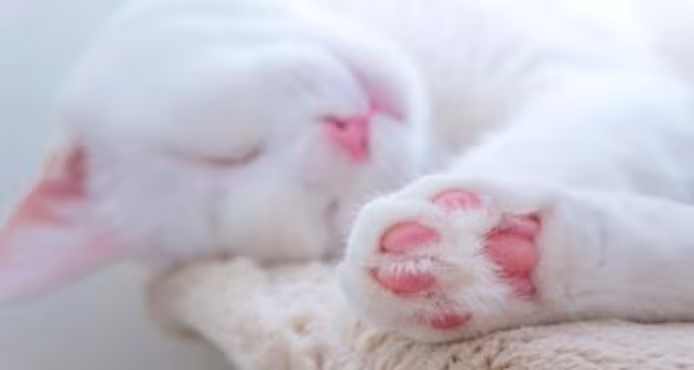
Cats are generally fairly stoic animals and are known for hiding signs of pain and discomfort. Find out how to know if your cat is having foot problems.
Paw pads are tough, thickened layers of fat and tissue that cover the bottom of the foot and help to provide shock absorption, balance, and traction for cats.
Cats are generally fairly stoic animals and are known for hiding signs of pain and discomfort, so noticing mild changes in the paw pads can be difficult. Limping, excessive licking or swelling of the foot may be some of the first signs that something is amiss. Despite the generally tough nature of these paw pads, they are not indestructible and can be damaged.
Cracked and Sloughed Paw Pads
Fortunately, injury to cats paw pads is not highly a common occurrence since most cats are kept indoors and not exposed to extreme elements or rough surfaces. However, paw pads can become cracked or experience sloughing of the skin as a result of a variety of underlying issues, including thermal or chemical burns.
Contact irritation from rough surfaces, high dust producing litter, or heavily perfumed litters, such as those marketed for odor control or multi-cat households, can also lead to problems with the paw pads. Allergic conditions, such as environmental allergies (otherwise known as atopy) or food allergies can also be associated with paw pad changes.
Although not overly common, underlying immune-mediated health conditions, such as plasma cell pododermatitis, or even cancerous processes can all lead to cracks in the paw pads or sloughing of the skin.
Ingrown Toenails in Cats
One of the most common foot problems in cats is the presence of ingrown toenails. Under normal circumstances, a cats toenails will grow in a circular fashion such that the nail will grow into the paw pad under the toe if left unattended.
This condition can be extremely painful, and can lead to the onset of infection and inflammation within the paw pad. Regular nail trims are critical to preventing ingrown toenails.
Cats with Extra Toes
How Many Toes Do Cats Have — and What Does That Mean for Their Paws?
Most cats have 18 toes total: five on each front foot (four weight-bearing digits plus one dewclaw) and four on each rear foot. Those toes are cushioned and protected by the paw pads underneath — the very structures that take the brunt of every jump, sprint and landing your cat makes.
Polydactyly: When Cats Have Extra Toes
Some cats are born with more than the standard 18 toes. This inherited condition is called polydactyly, and it can result in 12, 13, 14 or even more toes. Polydactyly is generally harmless, but it does come with one practical paw-care consideration worth knowing: the extra digits tend to be positioned close together, which makes them significantly more prone to developing ingrown toenails.
Because an ingrown nail can press painfully into the surrounding pad tissue and lead to infection, polydactyl cats need more frequent nail checks than the average cat. Keeping up with regular nail trims is the most effective way to prevent this problem. If you notice redness, swelling or your cat favoring a paw, consult your veterinarian promptly.
Paw-care tip: Check all of your cat's toes — including any extras — every time you do a routine nail trim. Catching a nail that's curling early is far easier than treating one that has already grown into the pad.
Why This Matters for Paw Pad Health
Extra toes mean extra surface area to monitor. Polydactyl cats may have additional paw pads corresponding to their bonus digits, and those pads deserve the same attention you'd give any other: check for cracking, cuts, foreign objects lodged between toes, or any sign of soreness. The closer spacing of extra digits can also trap moisture and debris, so a gentle wipe-down after outdoor adventures is a smart habit.
Fun fact: Polydactyl cats are sometimes called "Hemingway cats" — Ernest Hemingway kept a colony of them at his home in Key West, Florida, and descendants of those cats still live there today.
Common Cat Foot Problems
Some of the more common signs of paw pad or foot problems include limping (which can be subtle), excessive licking of the affected foot, bleeding, hair loss on the foot, or redness of the skin on the foot or between paw pads. If problems are noted, a trip to the vet is in order to evaluate your cats feet.
Preventing Foot Problems in Cats
Regular nail trims every 2-4 weeks and maintaining a healthy body weight for your cat are the most important steps to take with respect to preventing foot problems. Also, keep in mind that overweight or obese cats will place additional stress and strain on the feet, making them more susceptible to foot injuries.
During the nail trims, take a close look at all aspects of your cats foot to monitor it for changes. For cats that spend time outside, avoid letting them outside during extreme temperatures since both extremely hot and cold temperatures can lead to injury and damage of the paw pads.
Frequently Asked Questions
Why are my cat's paw pads cracked? Cracked paw pads in cats can stem from several causes: thermal or chemical burns, contact irritation from rough surfaces or heavily perfumed litters, environmental allergies (atopy), food sensitivities, or — less commonly — immune-mediated conditions such as plasma cell pododermatitis or cancerous processes. If you notice cracking, sloughing skin, or any changes in your cat's paw pads, consult your veterinarian to identify the underlying cause.
How do I know if my cat's paws are healthy? Healthy paw pads should feel firm but slightly pliable, with no visible cracks, swelling, redness, or hair loss between the toes. Because cats are naturally stoic and tend to hide discomfort, watch for subtle clues like limping, repeated licking of one foot, or reluctance to bear weight — these are often the earliest signs that something is wrong. A quick visual check during every nail trim (recommended every 2–4 weeks) is one of the simplest ways to stay ahead of problems.
How often should I trim my cat's nails to protect her paw pads? Nail trims every 2–4 weeks are the single most important step you can take to prevent ingrown toenails, which are among the most common foot problems in cats. Left unattended, a cat's nails grow in a circular arc and can curl directly into the paw pad, causing pain, inflammation and infection. Polydactyl cats — those born with extra toes — need especially consistent trims because their additional digits sit close together and are more prone to ingrowth.
Can litter irritate my cat's paw pads? Yes. High-dust litters and heavily perfumed varieties — including many marketed for odor control or multi-cat households — can cause contact irritation to the paw pads. If your cat is licking her feet excessively or you notice redness between the pads, switching to an unscented, low-dust litter is a reasonable first step, followed by a veterinary visit if symptoms persist.
When should I take my cat to the vet for a paw problem? Schedule a veterinary visit any time you observe bleeding, persistent limping, significant swelling, hair loss on the foot, redness between the paw pads, or skin that appears to be sloughing off. Because cats mask pain so effectively, even subtle or intermittent limping warrants a professional evaluation — early treatment almost always leads to a faster, more comfortable recovery. For guidance on feline health concerns, the Cornell Feline Health Center is a reliable resource. https://www.vet.cornell.edu/departments-centers-and-institutes/cornell-feline-health-center/health-information
Does my cat's weight affect her paw pad health? It can. Overweight and obese cats place significantly more stress and strain on their feet, making the paw pads more susceptible to injury and wear over time. Maintaining a wholesome diet and a healthy body weight — in partnership with your veterinarian — helps protect your cat's paws along with her overall wellbeing. https://www.merckvetmanual.com/management-and-nutrition/nutrition-small-animals/nutritional-requirements-of-small-animals
This article was created with assistance from AI tools and reviewed for accuracy by Petco's content team.
704Pet Parents found this article helpful


