Two Easy Ways to Start Earning Rewards!
Earn 2X Pals Rewards points at Petco
when you use Petco Pay!
Get It Today
Learn how to set up a freshwater fish tank and key considerations regarding placement, supplies needed, and the set up process.
Updated on October 23rd, 2025

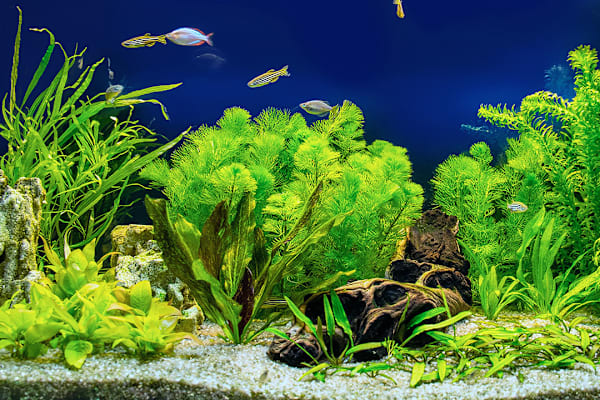
Tanks with live plants can be excellent additions to your home, bringing a touch of nature indoors. Learn how to take care of aquatic plants.
Updated on November 6th, 2025
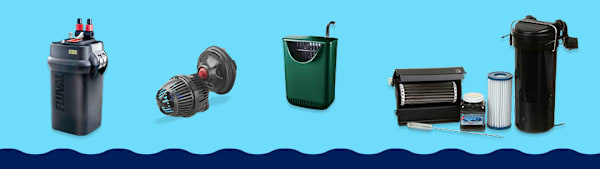
Discover the fish tank filter system that’s right for your aquarium. Learn about mechanical, chemical, and biological filtration at Petco.
Updated on June 19th, 2026
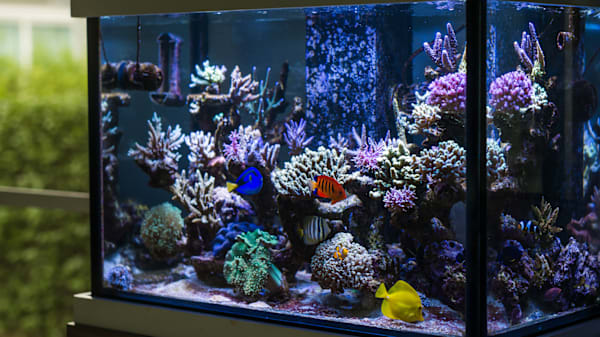
When choosing a new aquarium or moving to a new home you’ll want to know the dimensions, weight, and size of your tank to plan accordingly.
Updated on June 19th, 2026
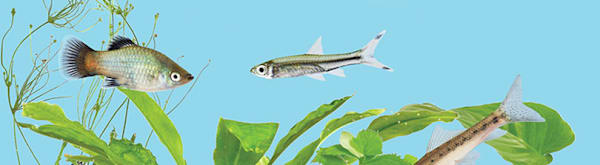
Feeding your freshwater fish isn't as simple as adding a pinch of flakes! Read these three tips to learn more about how to provide your pets the nutrition and environment they need.
Updated on July 17th, 2026
Without anything to use for scale, it is hard for me to tell how big your tank is, but in general it seems very small. Also, the water that is in the tank appears very cloudy right now, so that would be the first place to start. Water quality is very important, and will make or break your ability to house and care for fish. I would recommend getting a good filter system (you can visit a local pet store to assist you with brands in your area, as I am not familiar with what you can get in India). Be sure to bring the measurements (height, length, width) of your tank, or the gallons or liters so they can tell you what capacity of filter you will need. Everything else will depend on what types of fish you get - if you plan on getting multiple fish, they will need to be small - a general rule of thumb is one square inch of fish per gallon of water. Depending on the species you get, you may need to also get a bubbler to ensure there is enough oxygen in the water for them, and you will also likely need to get some sort of substrate for the bottom and cage furniture (different species have different air requirements, and some are secretive and like to hide). You may also need a water heater, depending on the species you would like to house. But, depending on how small your tank is, it may be hard to get a water heater that will fit. The food type will also depend on what species you get, as there can be differences in diet type between species. I hope that gives you a place to start, and good luck!
Updated on September 24th, 2025
Our Standard Aquarium Plant Pack provides a convenient solution for your dilemma. This package includes Micro Sword or Dwarf Hairgrass, Anubias Nana or Anubias Barteri Round Leaf, Java Fern, Red Cryptocoryne or Green Cryptocoryne, Water Sprite, Hornwort, and Cabomba. http://www.liveaquaria.com/product/prod_display.cfm?c=768+2145+2146&pcatid=2146 A substrate specifically designed for live aquarium plants such as CaribSea Eco-Complete Plant Substrate is recommended for long-term success. http://www.drsfostersmith.com/product/prod_display.cfm?pcatid=9087 Be sure to provide proper lighting conditions by employing aquarium light fixtures specifically designed for planted aquarium use.
Updated on September 24th, 2025
Yes, in order to have a healthy tank and to give your fish the best environment, it is necessary. Here is a good write-up on the reasons why: https://www.petcoach.co/article/water-chemistry-basics-ph-temperature-water-hardness-waste/
Updated on September 24th, 2025
The small size will limit the species of fish as well as the number. White Cloud Minnows or Guppies would do fine in a small tank. You could keep no more than 2 or 3 fish total. If you are looking for company for your Betta, the same species can be kept. Other options include Otocinclus (Otos), Corys, Platys or Harlequin Rasboras. Again, no more than one or two in addition to the Betta. Water changes for any tank are simple. Change no more than 30% total volume at a time. Use a water conditioner to remove harmful chemicals and make sure the water is temperature matched to prevent stress or shock. Rinse the filter in tank water, not tap water, to preserve beneficial bacteria. Vacuum the substrate every couple of weeks.
Updated on September 24th, 2025
Thanks for reaching out. There are many products available in pet stores for either adjusting pH up or down. Adding a buffer as a substrate (dolomite) could help regulate also. Maintaining water quality is obviously very important. Good luck.
Updated on September 24th, 2025