Two Easy Ways to Start Earning Rewards!
Earn 2X Pals Rewards points at Petco
when you use Petco Pay!
Easy returns in store or by mail See policy
Easy returnsGet It Today
pop-up content starts
pop-up content ends
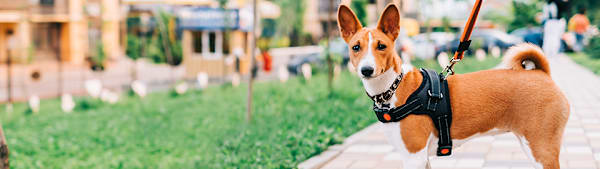
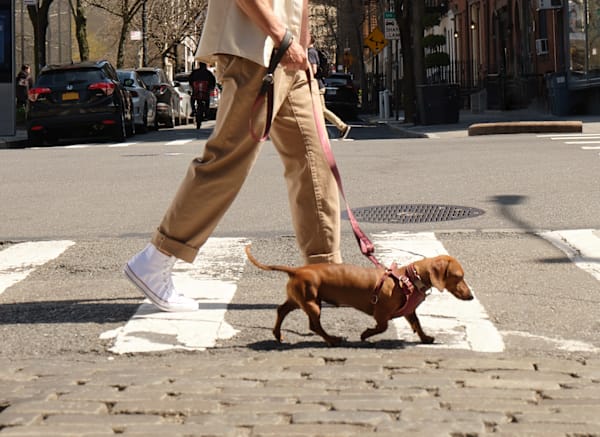
Find the best dog harness, collar or leash that suits your dog and will keep them comfortable and safe.
Updated on June 19th, 2026

Training a dog takes time, understanding, patience and consistency. Understanding your training options and the dog training basics will help you--and your dog--be set up for success.
Updated on October 23rd, 2025
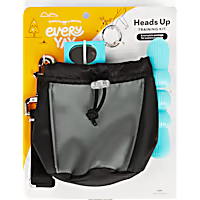
Choosing the best dog training treat all depends on your dog's preference and what environment you will be training in. Take a look at these recommendations from Petco positive dog training experts.
Updated on June 19th, 2026
Try this easy trick to teach your dog and see how much you can evolve the behavior over time into other fun games with your dog.
Updated on June 19th, 2026
Read information about dog training to understand and correct control your dog’s constant barking behavior.
Updated on June 19th, 2026
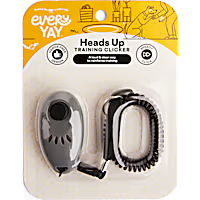
This is a great question! For training something easy like "sit", you're right that a clicker doesn't necessarily add much to the process. But for more complicated things, like training a dumbbell retrieve for obedience competition or teaching your dog to lie down on command at a distance from you, the clicker can be very useful. Basically, the click marks the specific behavior that you're going to reward. It doesn't matter so much when you're in position to reward instantly anyway - but for situations where you can't reward immediately (because the dog is far away, is holding something in his mouth, etc.) it makes a huge difference :) So use the clicker, or don't - it's really up to you, especially for basic obedience skills. But if you decide to branch out into more difficult or precise behaviors, it's worth looking into clicker training to make things easier.
Updated on September 24th, 2025
Sport dog is a good brand with several levels of correction. This will not be effective for chewing unless you are always there to correct her. If she chews when you are not home there is no way to know or enforce or correct this. For any training you have to ask them to perform something they know, such as sit. If they do not do it you push the button. If they do well then you reward them. Keep them on a leash while training. When you ask them to come, you pull the leash. If there is no interest then you correct them. They will learn to associate the two things together quickly to respond
Updated on September 24th, 2025
Shock collars, bark collars, and clicker training are all acceptable ways of training pets. The down side is they are ineffective if not done properly. They are great modalities in the correct hands that know how to implement them and do it correctly to where the dog understands what is being asked of them. Consulting a behavioral/trainer that is experienced is the best way to achieve positive results.
Updated on September 24th, 2025
Training a disobedient large breed dog with bad habits can certainly be happy. However, in the end, the use of positive reinforcement will always reign supreme. Depending on what motivates Roscoe most will need to be what you choose to make Roscoe want to listen. I think this is a perfect case for clicker training. A clicker is a device that makes a clicking noise when you press down on it. Basically you want to first teach Roscoe that the click is associated with something good happening, which is called "charging" or "priming" the clicker. Once Roscoe understands that the clicking noise is associated with food or treats, you will be able to use this tool to your advantage. You should carry the clicker with you at all times and make sure to use it any time you are rewarding Roscoe. In terms of the jumping and mouthiness, you need to be very careful not to inadvertently reward inappropriate behavior. I realize that that gut reaction to something jumping or biting at you is to yell or push away. Unfortunately, this is not going to get the picture across to Roscoe. Instead, what you want to do is simply turn away or move your hand away. Continue to do this until Roscoe stops this behavior on his own and sits calmly. It is at this point that you want to click and reward. Dogs that are extremely disobedient sometimes need to have more strict boundaries than other dogs so that they be good pets. It is possible that you may eventually have to train Roscoe so that he knows not to enter your personal space until you have given him permission. With respect to biting, obviously this is an extremely bad behavior for a large breed dog. Rather than saying no, you will want to deflect his attention to something else. I would teach him the "touch" command. Since he tends to bite, you will want to train him to touch something like a stick or a rod of sorts. As soon as he starts to do the biting thing, you will want to get him to touch the object. If he does this, click and reward. With repetition and consistency, this should resolve the issue. In regards to walking, pulling can sometimes be resolved with a change in the type of collar. Some dogs do better with different types of harnesses or gentle leaders, while others do fine with conventional collars. Some even require choke collars, though I usually reserve these as a last resort. You should be teaching your dog the heel command, and be using the clicker in this case as well to reward the appropriate behavior. However, until you figure out what type of collar / harness works best for Roscoe it will be difficult to train him appropriately. Behavior issues are often complex and somewhat difficult. Don't be afraid to go out and get a trainer or go to some obedience classes. You can even speak to a vet that has some interest in behavior that is willing to work with you. If there is anything else that I can do, don't hesitate to reach out. I'd love to work with you.
Updated on September 24th, 2025
Hi there. For training treats, you have quite a few different options depending on what she likes. Good, relatively low-value training treats would include kibble, Cheerios, carrots or green beans (cooked or raw), or packaged moist treats like BilJac or Blue Buffalo Blue Bits. High value training treats would include string cheese, pieces of meat (chicken, roast beef, or turkey), or cat food or liverwurst dispensed from a squeezable tube. It may take some trial and error to figure out what she likes enough to work for. Good luck!
Updated on September 24th, 2025